
Pricing Psychology Behind Mid-Range OnlyFans Subscriptions
OnlyFans subscriptions in the $7 to $12 band account for the largest share of paid spending on the platform, and the reasons are more psychological than economic. Most paid pages price between $4.99 and $49.99, yet the middle of that range absorbs the bulk of subscriber budgets. BestOnlyFans tracks this pattern across indexed pages, and the consistency suggests structural forces rather than coincidence. BestOnlyFans refreshes its rankings every month.
This article examines the pricing psychology behind mid-range subscriptions: why the $4.99 minimum sets a floor, why creators converge on $7 to $12, and how fee math shapes those decisions. It also covers what subscribers should assume about value at each tier and how promotions distort expectations.

The $4.99 Floor and Its Market Positioning Effect
OnlyFans enforces a $4.99 minimum on paid base subscriptions. That single rule shapes the entire paid tier structure above it, because subscribers rarely evaluate a $9.99 page in isolation. They evaluate it against the cheapest legitimate paid option they know exists.

A floor does two things at once. It prevents a race to the bottom that would devalue paid pages generally, and it gives subscribers a reference point. Anything at $4.99 reads as entry-level; anything at $12.99 reads as a deliberate step up. Without the floor, the anchor would be $0, and every paid page would need to justify its existence from scratch.
- Establishes a legitimacy threshold that separates casual pages from committed creators posting on schedule.
- Sets an expectation that basic content access is included at any paid price, not sold separately.
- Creates a mental anchor subscribers use to judge whether higher prices are proportionate.
- Drives some creators toward free pages with PPV instead, since $0 removes the subscription barrier entirely.
- Inflates the perceived value of promotional first months priced below $4.99, which are allowed while base prices are not.
The floor also explains why the $4.99-$15 range is described as typical. Below $4.99 there is no legal paid base price, and above $15 the pool of willing subscribers narrows quickly for creators without established audiences.
Clustering Dynamics in the $7-$12 Band
If the floor is $4.99 and the ceiling is $49.99, the middle should be sparse. Instead it is crowded. Five forces push creators and subscribers toward the same narrow band.
- $9.99 and $11.99 are psychologically familiar from streaming services, apps, and memberships, so they require no explanation.
- After the 20 percent platform fee, these prices yield net amounts that feel like round, defensible returns per subscriber.
- Ranking visibility tends to favor mid-range pages, since extremely cheap pages can read as thin and extremely expensive ones as risky.
- Subscriber willingness experiments show resistance above roughly $12 for creators the subscriber has not followed elsewhere.
- The pricing interface makes adjustment to these exact points frictionless, so creators gravitate to them by default.
Charm pricing reinforces the pattern. A price ending in .99 reads as considered rather than arbitrary, and the gap between $9.99 and $10.00 feels larger than one cent should. Multiply that effect across thousands of pages and the band becomes self-reinforcing.

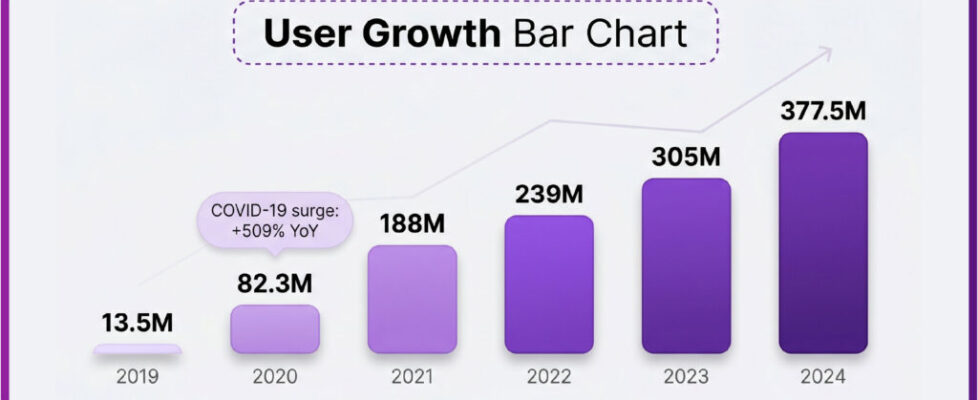
Growth in the platform’s user base intensified this clustering rather than loosening it. More subscribers meant more pages competing for attention, and mid-range pricing became the safest default for creators without a pre-existing audience.
Platform Fee Structure and Creator Revenue Calculations
The platform takes 20 percent of everything: subscriptions, tips, and PPV unlocks. The creator keeps 80 percent. That split is simple, but it changes which price points feel worth choosing.
At $4.99, a creator nets about $3.99 per subscriber. At $9.99, the net is about $7.99. The absolute difference is four dollars, but the proportional difference is double. Creators who have any pricing power tend to move up rather than accept the floor.
| Listed Price | Creator Net (80%) | Subscriber Monthly Cost |
|---|---|---|
| $4.99 minimum | ~$3.99 | Entry-level positioning |
| $7.99 common mid-point | ~$6.39 | Established creator baseline |
| $9.99 psychological anchor | ~$7.99 | Familiar subscription comparison |
| $12.99 upper-mid standard | ~$10.39 | Niche or higher-volume positioning |
| $24.99 premium tier | ~$19.99 | Requires strong justification |
The fee also discourages micro-pricing. Dropping from $5.99 to $4.99 costs a creator a full dollar of net revenue while saving the subscriber only one dollar of perceived value. That trade rarely pays off, which is another reason pages stack up above the floor rather than at it.
Tip: when a creator raises a base price, auto-renew stops for existing subscribers. Their access continues until the paid period ends, but they must actively resubscribe at the new rate. If you budget around a locked-in price, check the renewal notice.

Subscriber Perception of Value at Different Tiers
Subscribers do not evaluate prices as a continuous scale. They sort pages into rough categories, and each category carries assumptions about posting frequency, interaction, and content depth.
- $4.99 suggests an entry-level page or one running frequent promotions to stay competitive.
- $7.99 signals an established creator who posts regularly and does not need to discount heavily.
- $9.99 implies premium positioning with some expectation of direct interaction or consistent engagement.
- $12.99 indicates a specialized niche or higher production values that justify the step above the anchor.
- Prices approaching $49.99 trigger expectations of personalized or exclusive access rather than standard subscriptions.
These categories matter because mismatches create cancellations. A subscriber who pays $12.99 expecting daily posting and finds weekly posting will churn regardless of content quality. A subscriber paying $7.99 for a page that exceeds expectations becomes far more tolerant of price increases later.
The practical takeaway is that the number on the page is a signal before it is a cost. Subscribers use it to predict what they will receive, and creators who understand that price deliberately rather than arbitrarily.
Promotional Pricing and Its Distortion of True Mid-Range
First months can be priced below $4.99 even though base prices cannot. A $3 first month is permitted. This exception is common enough that it distorts how subscribers perceive the market.
- Temporary budget relief masks the true ongoing cost, making a page feel cheaper than it will renew at.
- Subscriber acquisition focus pulls creator resources away from retention content during the promotional window.
- Ranking sites may display the promotional price rather than the base price, depending on how they tag listings.
- Auto-renew at the higher base rate surprises subscribers who forgot what the standard price was.
- Free pages run the same psychology through PPV unlocks instead of subscription jumps, with per-message prices commonly $3-$5 and unlocks up to $50.

The cancel-subscription flow reflects this confusion. Many subscribers cancel because the renewal price differed from what they mentally recorded, not because the content disappointed them. Treating the first month as a trial with a known end price prevents that outcome.
Ranking Site Evidence of Price Band Concentration
That absence is why ranking sites exist, and it is also why their aggregated data is useful for understanding where prices actually sit. The BestOnlyFans methodology indexes pages and tags displayed prices, then compares distributions across categories.
| Data Indicator | What It Measures | Subscriber Takeaway |
|---|---|---|
| Median displayed price | Central tendency across indexed pages | Mid-range is the norm, not an outlier |
| Frequency distribution peaks | Where prices bunch together | $7-$12 concentrates the most listings |
| Promotional versus base tagging | Accuracy of price display | Verify the renewal rate before subscribing |
| Price change velocity by tier | How often prices move | Lower tiers adjust more frequently |
| Price band versus page longevity | Whether pricing correlates with persistence | Mid-range pages tend to last longer |
Aggregated indicators like these avoid the trap of citing individual creators, whose circumstances are not generalizable. They show patterns: concentration in the middle, more volatility at the bottom, and a long tail of premium pages that serve narrow audiences.
The honest limitation is that ranking data reflects displayed prices, which change. A page at $9.99 today may have been at $6.99 last quarter. Trends matter more than snapshots, which is why comparing a creator who genuinely meets expectations, such as the best onlyfans account, is more reliable than reading a single price point in isolation.

Practical Budget Implications for Consistent Subscribers
The goal is not to find the cheapest page but to predict total monthly cost accurately before committing.
- Assume the base rate, not the promotional rate, when planning an annual subscription budget.
- Weight $7-$12 pages as the standard expectation and require justification to deviate in either direction.
- Treat sub-$5 paid pages as promotional candidates and verify what the renewal price will be.
- Consider total cost including PPV messages, paid chat at $3-$5 per message, and tips, not the subscription alone.
- Review whether higher-priced pages deliver proportionally more value or simply exploit the anchoring effect.
A subscriber following five pages at an average of $9.99 spends roughly $50 per month before any PPV or tips. Adding occasional unlocks at $10-$50 each can double that figure quickly. The subscription line is the visible cost; the interaction line is the hidden one.
The card verification hold of $0.10 is refunded within days and does not affect budgeting. What does affect it is renewal timing: multiple pages renewing in the same week create a cash-flow spike that feels larger than the individual prices suggest. Spacing subscriptions across the month flattens that curve.
FAQ
Why do so many OnlyFans creators price at $9.99 specifically?
$9.99 is familiar from other subscription services, so it needs no explanation to subscribers. It sits comfortably above the $4.99 floor and below the roughly $12 resistance point for unknown creators. After the 20 percent fee, it also nets a round-feeling amount that creators find easy to justify.
Is a $7 subscription usually better value than a $12 one?
Not inherently. Price signals expected posting frequency and interaction, but it does not guarantee them. A $7.99 page with consistent daily posting can outperform a $12.99 page that posts weekly. Compare recent activity and posting patterns rather than assuming a higher price means more content.
How do I know if a low promotional price will jump dramatically later?
Check the base price shown on the page, not just the promotional offer. Promotions below $4.99 are permitted for first months, but the standard rate is what renews. If the base price is not displayed clearly, treat the renewal cost as unknown and confirm before subscribing.
Does the platform fee explain why creators rarely price below $5?
Partly. The $4.99 minimum prevents paid base prices below that figure, and the 20 percent cut makes lower prices less attractive even where promotions allow them. A creator netting under $4 per subscriber needs substantially more volume to reach the same revenue as one pricing at $9.99.